

The abbreviation IDTS Meaning in Text stands for “I Don’t Think So”, a popular slang term widely used in online chats and social media conversations. People often use IDTS to express doubt, disagreement, or uncertainty in a casual tone.
Understanding what IDTS means in texting helps you keep up with modern digital language and slang commonly seen on Snapchat, Instagram, and WhatsApp. This quick guide explains the IDTS full form, usage, and real examples so you can text more confidently.
What Does “IDTS” Mean in Text?

The acronym “IDTS” stands for “I Don’t Think So”, a common phrase used in texting and social media chats to express doubt, disbelief, or polite disagreement. In digital conversations, people often use IDTS as a quick and informal way to respond without typing the entire sentence. For instance, when someone says, “You’re coming tonight, right?” a reply of “IDTS” simply means you probably won’t.
| Term | Full Form | Meaning | Tone |
| IDTS | I Don’t Think So | Expression of doubt or disagreement | Informal / Casual |
It’s a shorthand expression used frequently in Snapchat messages, Instagram DMs, WhatsApp chats, and online forums. Understanding what IDTS means in text helps you interpret tone and context correctly — especially since digital slang can often be misunderstood if taken literally.
Common Use of “IDTS”
People usually use IDTS during everyday digital conversations to softly disagree or express uncertainty without sounding too harsh. It’s conversational, relaxed, and fits perfectly in casual exchanges between friends or peers.
Examples of “IDTS” in a text message:
- Friend: “You actually finished that 10-page essay?”
You: “Haha, IDTS 😅” - Person A: “He’s serious about joining the gym this time.”
Person B: “IDTS, he says that every year.”
From a linguistic perspective, IDTS blends brevity and tone — making your replies sound more natural in digital communication. It’s similar to other texting slangs like IMO (In My Opinion) or TBH (To Be Honest).
Is “IDTS” Rude or Too Casual?
Not really — “IDTS” is not rude, but its tone depends on context and relationship. In friendly chats, it sounds light and funny, but in formal conversations or work-related messages, it might appear too casual or dismissive.
Here’s a quick tone comparison:
| Context | Acceptable? | Comment |
| Friends Chat | ✅ Yes | Sounds friendly and relaxed |
| Professional Email | ❌ No | Too informal for business |
| Online Comment | ⚠️ Maybe | Depends on tone and intent |
So, if you’re messaging a friend, IDTS works perfectly. But if you’re replying to your boss or a client, it’s better to use a complete phrase like “I don’t think so” to maintain professionalism.
Why You Might Want Alternatives:
While IDTS is trendy and time-saving, using it too often can make your tone sound lazy or unclear especially in professional or mixed-age conversations. To improve clarity and maintain tone, you can try alternatives that suit your situation better.
Here are some common replacements:
| Alternative Phrase | Best Used When | Example |
| “I don’t believe so.” | Neutral or polite response | “Will the event be canceled?” → “I don’t believe so.” |
| “Probably not.” | Informal but friendly | “You’ll come tonight?” → “Probably not.” |
| “Highly unlikely.” | More formal tone | “Will sales drop next quarter?” → “Highly unlikely.” |
| “I doubt it.” | Expressing mild skepticism | “Do you think he’ll apologize?” → “I doubt it.” |
Using these alternatives ensures your digital communication stays clear, contextually appropriate, and professional when needed.
15 Better Ways to Say “IDTS” (I Don’t Think So)
If you feel that using “IDTS” (I Don’t Think So) sounds too brief or casual, there are many natural alternatives you can use in text messages, emails, or even spoken English. These phrases carry the same meaning—showing doubt, disagreement, or uncertainty—but sound more polished and context-appropriate.
Below are 15 better ways to say “IDTS” in both formal and informal situations, along with brief explanations so you can choose what fits best:
| Alternative Phrase | Ideal Use | Example Sentence |
| 1. I’m not sure about that. | When you want to sound polite but uncertain. | “I’m not sure about that; maybe we should double-check.” |
| 2. That doesn’t sound quite right. | When something feels off or inaccurate. | “That doesn’t sound quite right, are you sure?” |
| 3. I’m not convinced. | Expressing skepticism diplomatically. | “I’m not convinced that plan will work.” |
| 4. I have my doubts. | When you want to show gentle disagreement. | “I have my doubts about his explanation.” |
| 5. I don’t believe that’s the case. | A professional alternative to IDTS. | “I don’t believe that’s the case based on our data.” |
| 6. I’m not entirely sure. | Soft uncertainty without sounding negative. | “I’m not entirely sure that’s what she meant.” |
| 7. I could be wrong, but… | Shows humility while expressing doubt. | “I could be wrong, but I think you missed a detail.” |
| 8. I’d have to disagree with that. | Respectful disagreement in formal tone. | “I’d have to disagree with that conclusion.” |
| 9. That’s not how I see it. | Polite difference in opinion. | “That’s not how I see it, but I get your point.” |
| 10. It seems unlikely. | Neutral and factual tone. | “It seems unlikely that he’ll show up on time.” |
| 11. I’m doubtful. | Short and clear for casual chats. | “I’m doubtful he’ll finish by tonight.” |
| 12. That may not be correct. | Professional and careful phrasing. | “That may not be correct; let’s recheck the source.” |
| 13. I’m leaning toward a different conclusion. | Analytical or academic use. | “I’m leaning toward a different conclusion after reviewing the facts.” |
| 14. I’m not on the same page. | Friendly tone to show differing views. | “I’m not on the same page, but I understand your point.” |
| 15. I don’t think that’s accurate. | Confident and factual tone. | “I don’t think that’s accurate based on what I know.” |
Each of these expressions adds clarity and tone control that “IDTS” sometimes lacks, helping your messages sound more natural and emotionally aware. Whether you’re texting a friend, chatting online, or writing to a colleague, choosing the right phrase can make your communication clearer and more respectful.
Tone Matters: Choosing the Right Alternative
When replacing “IDTS” (I Don’t Think So), your tone plays a huge role in how your message is received. The same phrase can sound polite, doubtful, or even sarcastic, depending on context. For example, replying “IDTS” to a close friend might feel funny and relaxed, but sending it to a coworker could seem dismissive.
If you’re in a friendly conversation, phrases like “I could be wrong, but…” or “That doesn’t sound right” work naturally. However, for formal situations, use refined alternatives such as “I don’t believe that’s correct” or “It seems unlikely.” Always match your tone to your audience — casual for social chats, respectful for professional talks.
In digital communication, tone defines perception, so choose words that maintain clarity, respect, and intent while expressing doubt.
When Should You Avoid Using “IDTS”?
While IDTS is common in texting and social media, there are certain contexts where it’s better avoided. If you’re talking to teachers, clients, or professionals, using slang like “IDTS” might sound too informal or immature.
You should also avoid it when:
- You need to maintain a professional tone (e.g., workplace chats, emails).
- You’re addressing older audiences who may not understand text abbreviations.
- You want to avoid sounding sarcastic or uninterested.
In such cases, it’s best to replace IDTS with complete, polite sentences like “I don’t believe so” or “That may not be accurate.” These alternatives make your communication sound clear, respectful, and credible while preserving your intended meaning.
What Makes a Good Alternative?
A good alternative to “IDTS” depends on tone, clarity, and emotional intent. It should clearly express disagreement or uncertainty without confusing the reader. The best options are those that fit your relationship with the recipient and the seriousness of the conversation.
For instance:
- Friendly tone: “I have my doubts.”
- Professional tone: “That may not be correct.”
- Neutral tone: “I’m not sure about that.”
The key is to select alternatives that align with context and personality. Using a balanced mix of politeness and precision ensures your messages sound mature, relatable, and easily understood.
Idts Meaning in Text Funny
In casual conversations, people often use IDTS in a funny or sarcastic way to keep the mood light. For example, if a friend claims something unbelievable like “I can run 10 miles without stopping,” replying “IDTS 😂” adds humor while still showing disbelief.
This “funny IDTS” tone is especially common on Snapchat, Instagram, or Twitter, where users mix emojis and abbreviations to create playful banter. The humorous side of IDTS meaning in text lies in how it softens disagreement with a touch of sarcasm making your chat sound friendly and relatable instead of blunt.
Idts Meaning Medical
In a medical or clinical context, IDTS can have a completely different meaning. It often stands for “Intermittent Drainage Tube System” or “Integrated Data Tracking System,” depending on the field of healthcare or research.
| Acronym | Medical Meaning | Field |
| IDTS | Intermittent Drainage Tube System | Surgical / Post-operative care |
| IDTS | Integrated Data Tracking System | Medical research / Data management |
So, while IDTS meaning in text usually refers to “I Don’t Think So,” it’s important to note that in medical documentation, the acronym can signify a technical system or process rather than slang. Always interpret abbreviations based on context to avoid confusion.
Idts Meaning in Text Urban Dictionary
According to Urban Dictionary, IDTS is defined as an abbreviation for “I Don’t Think So”, used to express doubt or disbelief in online conversations. It’s often tagged with meanings like “skeptical,” “sarcastic,” or “playful denial.”
For example, Urban Dictionary explains that someone might text “IDTS” when they don’t agree with a statement but don’t want to start an argument. It’s widely recognized as a Gen Z texting term found across platforms like TikTok, Discord, and Snapchat.
So, when you come across IDTS in the Urban Dictionary or online slang lists, remember that it reflects modern digital language — a quick, expressive way to say “I doubt it” or “probably not.”
Idtg Meaning in Chat
The acronym IDTG in chat typically means “I Don’t Think so, Girl” or “I Don’t Think That’s Good,” depending on the context. It’s a playful variation of IDTS, often used when chatting casually with friends.
For example:
- Friend: “He said he’s going to text you again.”
You: “IDTG, he’s just bluffing.”
The IDTG meaning in chat reflects a mix of humor and skepticism, commonly used in friendly or sarcastic conversations. It carries a tone similar to “Yeah, right” or “I doubt that.”
Idts Urban Dictionary
According to Urban Dictionary, IDTS stands for “I Don’t Think So,” and it’s used when someone wants to express disbelief or polite refusal. The platform explains that IDTS is often typed in lowercase or uppercase depending on tone — “idts” for casual disbelief, and “IDTS” for a stronger response.
Example from Urban Dictionary usage:
- “Did you really finish your essay in 10 minutes?”
“IDTS.”
Urban Dictionary also classifies IDTS under modern internet slang, showing how digital users use abbreviations to make texting faster and more expressive.
ISTG Meaning in Text
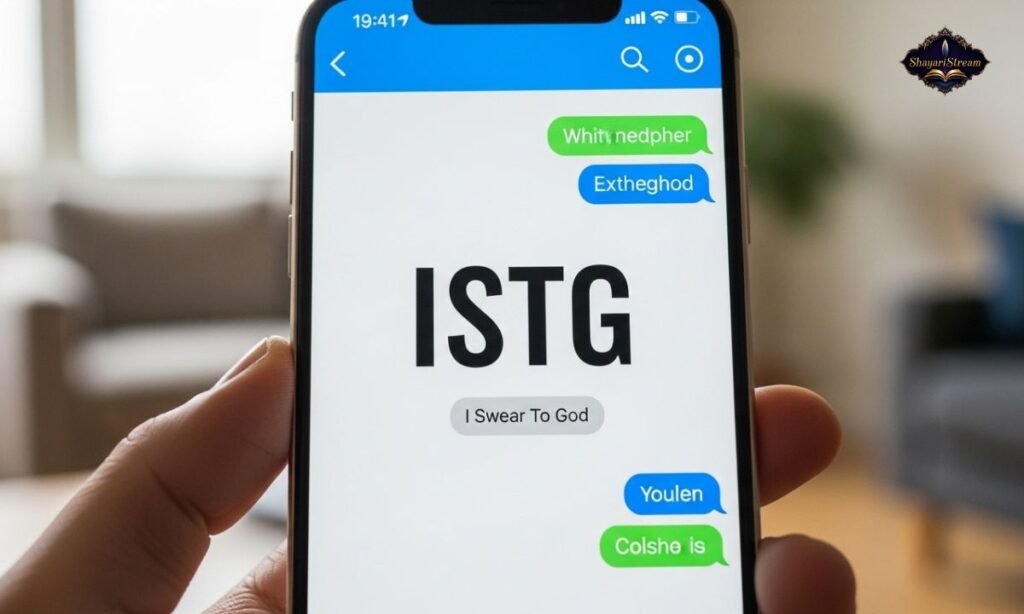
ISTG stands for “I Swear To God.” It’s another frequently used phrase in texting, often expressing strong emotion, frustration, or sincerity. While IDTS conveys disbelief or doubt, ISTG emphasizes conviction or truth.
| Term | Full Form | Meaning in Text |
| IDTS | I Don’t Think So | Doubt or disbelief |
| ISTG | I Swear To God | Strong emphasis or truth claim |
Example:
- “ISTG I didn’t eat your food!”
- “IDTS, you totally did!”
These two phrases often appear together in conversations to show contrasting tones — disbelief versus insistence.
IDTS Meaning in Business
In a business context, IDTS can take on entirely different meanings depending on industry and company usage. While it’s known in texting as “I Don’t Think So,” in professional and corporate environments, IDTS can stand for:
| Acronym | Business Meaning | Industry |
| IDTS | Integrated Data Tracking System | Information Technology / Analytics |
| IDTS | International Digital Transaction Services | Finance / Payment Processing |
| IDTS | Innovative Design and Technical Solutions | Engineering / Consulting |
In business communication, abbreviations like IDTS are usually context-sensitive, meaning that the intended definition depends on the field or company using it. Therefore, it’s important not to confuse IDTS (I Don’t Think So) from texting slang with its corporate abbreviations in professional documents.
IDTS Company
There is also a real-world company named IDTS, short for Integrated DNA Technologies, Inc. (IDT) sometimes mistakenly referred to as IDTS. This U.S.-based biotechnology company specializes in genetic research tools, synthetic DNA, and RNA technologies.
Quick Company Overview:
| Name | Integrated DNA Technologies (IDT) |
| Industry | Biotechnology / Life Sciences |
| Headquarters | Coralville, Iowa, USA |
| Founded | 1987 |
| Specialty | DNA synthesis, molecular biology solutions |
Although the company’s correct abbreviation is IDT, some users online incorrectly type IDTS when referencing it. Always verify spelling before referring to a corporate entity in professional communication.
Idts Meaning in Text in Urdu
In Roman Urdu or Urdu chats, “IDTS” translates to “Mujhe aisa nahi lagta” or “Mujhe nahi lagta ke aisa hoga.” It carries the same meaning as the English phrase “I Don’t Think So.”
Examples in Roman Urdu chats:
- Friend: “Tu kal aa raha hai na?”
You: “IDTS yaar, thoda busy hoon.” - Friend: “Woh sach bol raha hai?”
You: “IDTS, mujhe nahi lagta.”
So, whether you’re chatting in English or Roman Urdu, the IDTS meaning in text remains the same it expresses doubt or disbelief in a friendly, conversational tone. This phrase has become a global part of digital slang, understood across different languages and cultures.
Idts Meaning in Text Pakistan
In Pakistan, the term IDTS carries the same meaning as it does globally — “I Don’t Think So.” It’s widely used by young people on WhatsApp, Snapchat, Instagram, and TikTok to show disbelief or doubt. However, its tone depends on the situation — it can sound funny, sarcastic, or casual.
In Pakistani texting culture, abbreviations like IDTS, LOL, TBH, and ISTG are extremely common. You might see messages like:
- Friend: “Woh sach bol raha hai?”
You: “IDTS 😂”
Here, the IDTS meaning in text Pakistan is just a local expression of “Mujhe nahi lagta” or “I don’t think so.” It’s become a natural part of how Gen Z communicates online.
ISTG Meaning Text
ISTG stands for “I Swear To God.” It’s a strong slang phrase used to express truth, emotion, or frustration in texting. While IDTS shows doubt, ISTG shows certainty or intensity.
| Term | Full Form | Tone | Common Use |
| ISTG | I Swear To God | Strong / Emotional | Used to emphasize truth or frustration |
| IDTS | I Don’t Think So | Doubtful / Casual | Used to express disbelief or denial |
Example:
- “ISTG, I didn’t do it!”
- “IDTS, you always say that!”
So, while both terms appear in online slang, they serve opposite emotional purposes — one emphasizes truth, and the other expresses doubt.
I Don’t Think So Short Form in Chat
The short form of “I Don’t Think So” in chat is IDTS — a quick, modern abbreviation used to keep texting faster and easier. Instead of typing the full phrase, users simply write “IDTS” when they want to politely disagree or doubt something.
Example:
- “Do you think he’ll reply soon?”
→ “IDTS.”
It’s part of modern digital shorthand alongside abbreviations like IMO (In My Opinion) and IDC (I Don’t Care) — helping people express full sentences in just a few characters.
What Does IDTS Mean in Texting
In texting, IDTS stands for “I Don’t Think So.” It’s a common abbreviation used in casual chats, social media comments, and DMs to show doubt or disbelief.
Example Uses:
- “He’s actually serious this time.” → “IDTS.”
- “You’ll finish that project by tonight?” → “IDTS 😂”
The IDTS meaning in texting is friendly and light-hearted, but depending on tone, it can also sound dismissive. To keep it polite, many users pair it with emojis or a soft phrase like “IDTS, maybe next time.”
What Does IDTS Stand For
The abbreviation IDTS stands for “I Don’t Think So.” It’s a popular internet slang term that conveys doubt, skepticism, or polite disagreement.
Here’s a quick breakdown:
| Acronym | Full Form | Meaning | Common Platforms |
| IDTS | I Don’t Think So | Expresses disbelief or doubt | WhatsApp, Snapchat, Instagram, Discord |
So, when someone texts IDTS, they simply mean they’re not sure or they don’t agree. It’s short, smart, and fits naturally into everyday digital language.
What Does TFW Mean in Texting
TFW stands for “That Feeling When.” It’s often used to describe a relatable emotion or situation, usually paired with a meme, photo, or reaction.
Example:
- “TFW you realize tomorrow is Monday 😩”
- “TFW your favorite song starts playing out of nowhere 🎶”
While IDTS conveys doubt or disagreement, TFW expresses emotional relatability — making it popular on Twitter, Reddit, and TikTok captions.
| Acronym | Full Form | Common Use | Tone |
| IDTS | I Don’t Think So | Disbelief or disagreement | Casual / Sarcastic |
| TFW | That Feeling When | Emotional expression / memes | Relatable / Funny |
Both phrases show how online slang has evolved to express tone and emotion efficiently in digital spaces.
IDTS Full Form in Text
The full form of IDTS in text is “I Don’t Think So.” It’s one of the most common slang abbreviations used in online chatting, texting, and social media platforms like WhatsApp, Snapchat, and Instagram.
When someone types IDTS, they’re expressing doubt, disbelief, or a polite disagreement without having to write a long reply. It helps keep conversations short and casual while still conveying meaning clearly.
Example:
- “He said he’s rich now.” → “IDTS 😂”
So, whenever you see IDTS in a message, remember it’s simply a short way of saying “I don’t think so.”
IDTS Stands For
The abbreviation IDTS stands for “I Don’t Think So.” It’s a digital shortcut that represents mild skepticism or disagreement in a friendly way.
Here’s a quick breakdown for clarity:
| Acronym | Stands For | Meaning | Tone |
| IDTS | I Don’t Think So | Used to show disbelief or doubt | Casual / Informal |
You’ll most often find it in casual messages between friends, where short forms like TBH (To Be Honest) or IDC (I Don’t Care) are also common.
IDTS Meaning
The meaning of IDTS in texting is “I Don’t Think So.” It’s typically used to deny something politely or express disbelief without being rude. For example:
- “Do you think she’ll come?” → “IDTS.”
- “He’s being honest this time.” → “IDTS, maybe.”
The IDTS meaning shows how online language has evolved to make conversations short, expressive, and relatable. It’s not rude unless used with a sarcastic tone.
What Is the Meaning of IDTS
The meaning of IDTS depends on context and tone. In most cases, it simply means you disagree or doubt something. It’s widely used by teenagers and young adults in digital conversations to keep replies fast and expressive.
If you say IDTS in a humorous chat, it sounds playful. In a serious talk, it can show skepticism or polite refusal. Always consider your tone and the other person’s comfort before using it.
What Does ## Mean in Texting
The “##” symbol in texting usually acts as a placeholder or code, depending on the platform. On Twitter or Instagram, it might appear due to a formatting issue or when a hashtag (#) is repeated accidentally.
In some SMS systems or chat codes, “##” can also represent a break, stop command, or emphasis when automated systems read texts. It’s not a slang word like IDTS, but rather a technical or stylistic symbol used in digital writing.
Text ID Meaning in Urdu
The term “Text ID” in Urdu generally refers to “Matn ka Pehchan Number” or “Pehchan Shanakhti Number.” In digital terms, it’s a unique identifier for a message — often used in banking, verification, or service notifications.
For example, when you receive a message like “Your verification code has been sent – Text ID: 12345”, that code helps identify the message source.
So, Text ID in Urdu means the specific number or code attached to a text for recognition or confirmation.
What Does Abbreviations Mean
Abbreviations are shortened forms of words or phrases used to make communication faster. In texting and online chats, abbreviations like IDTS (I Don’t Think So), TBH (To Be Honest), and BRB (Be Right Back) are widely used.
They help convey meaning quickly without typing full sentences. For example:
- “BTW” = By The Way
- “OMG” = Oh My God
- “IDTS” = I Don’t Think So
Abbreviations have become an essential part of digital communication, helping users save time and keep messages more casual and conversational.
What Does IDC Mean in Texting
The abbreviation IDC in texting stands for “I Don’t Care.” It’s a common chat slang used when someone wants to express indifference or lack of concern about a topic.
You’ll often see it in casual conversations among friends when the person isn’t bothered by something or doesn’t want to take sides.
Examples:
- “What movie should we watch?” → “IDC, anything.”
- “He said he’s angry.” → “IDC 😂”
So, IDC means “I Don’t Care” — short, direct, and often playful, but tone matters. Used politely, it’s casual; used harshly, it can sound rude.
Text Abbreviations and Meanings
Text abbreviations are short forms or acronyms that make chatting faster and easier. People use them every day on WhatsApp, Instagram, TikTok, and Snapchat.
Here’s a quick list of popular texting abbreviations and their meanings 👇
| Abbreviation | Full Form | Meaning / Usage |
| IDTS | I Don’t Think So | Shows disbelief or doubt |
| IDC | I Don’t Care | Expresses indifference |
| TBH | To Be Honest | Sharing an honest opinion |
| BRB | Be Right Back | Used when leaving chat briefly |
| OMG | Oh My God | Expresses surprise or shock |
| LOL | Laugh Out Loud | Shows laughter or humor |
| BTW | By The Way | Adds extra information |
| TTYL | Talk To You Later | Saying goodbye for now |
| SMH | Shaking My Head | Expresses disappointment |
| ISTG | I Swear To God | Emphasizes truth or frustration |
Text abbreviations like these make digital conversations smoother and more expressive, especially in Pakistan, where people mix English + Roman Urdu in chats.
Frequently Asked Questions
What does IDTS mean in text messages?
IDTS stands for “I Don’t Think So,” a common texting abbreviation used to express doubt or mild disagreement in chats or social media.
What is the full form of IDTS in chat?
The full form of IDTS is I Don’t Think So, often used to reply casually when someone disagrees or is uncertain about something.
Is IDTS slang or abbreviation?
Yes, IDTS is a popular internet slang and abbreviation that simplifies the phrase “I don’t think so” in digital conversations.
How do you use IDTS in texting?
You can use IDTS to show uncertainty or disbelief. Example: “He might come to the party.” → “IDTS, he’s busy tonight.”
Is IDTS rude to say in text?
No, IDTS isn’t rude. It’s casual and polite, depending on tone. It just shows that you don’t agree or believe something fully.
What does IDTS mean in social media comments?
On platforms like TikTok or Instagram, IDTS means the same — “I Don’t Think So” — often used playfully in comment sections or replies.
Final Words
In short, understanding IDTS Meaning in Text helps you keep up with modern slang and express your tone clearly in digital chats. Whether you’re texting friends, commenting online, or chatting casually, knowing abbreviations like IDTS makes your communication smarter and more natural.

Sarah Mitchell is a creative writer and content enthusiast who believes in the timeless power of words. With a passion for literature and expression, she dedicates her work to crafting relatable and meaningful pieces that inspire and connect with readers.
At ShayariStream, Sarah focuses on curating English Shayari, Quotes, Messages, and Status & Meanings that capture emotions and moments in the most authentic way. Her writing reflects everyday feelings—from love and happiness to motivation and reflection—making it easy for people to find words that truly resonate.
Sarah’s mission is to help readers express their thoughts beautifully, whether it’s through a heartfelt message, an inspiring quote, or a simple status update. Her commitment to quality and creativity ensures that every visitor to ShayariStream leaves with words that add meaning to their lives.